

NOTE 1 | Levels of Abstraction: A Foundational Concept for Creative Writing in the 21st Century
Defining "high concept" fiction, genre and the frustrations of pitching, Sender vs. Kanakia on what makes a book good

Series Intro: Well, I had to start somewhere. Nowhere is perfect and anywhere works. This is the first post in a series called "Notes Toward an Aesthetics of 21st Century Creative Writing," my ongoing effort to define an artistically valid role for AI in my creative process, including guardrails and areas of opportunity. The stagnant, shallow, reactive nature of the three-year-old AI discourse proves our familiar ways of talking about writing are inadequate; indeed, it has failed to answer any of my deepest questions. For those with reverence for the craft, the idea is to build out a framework of language and concepts continuous with how the writing community has always understood our artform—what it is, how it works, why we value it—that also equips us to understand a new landscape of possibilities we weren't prepared to imagine (but are here anyway!). I hope my public exploration improves our ability to have productive discussions across differing preferences in this area, with more clarity and less judgement.
Levels of Abstraction
Full post here if your email client cuts it short.
1. An On-Ramp: Defining “High Concept”
Take the back cover description of a typical work of contemporary literary fiction:
Four college classmates move to New York in search of fame and fortune. While their relationships, which are tinged by addiction, success, and pride, deepen over the decades, the men are burdened and held together by the childhood trauma of one of their number, whose depression only intensifies with time. A masterful paean to brotherly bonds and found family.1
This sounds extremely generic. Even if it’s exactly the kind of thing you like to read, you might wonder how to differentiate it from the thousands of other stories about young people trying to make it in New York, facing challenges internal and external when they arrive. If you hesitate to buy in the moment, you may struggle to look the book up later—both your memory and the search engine may fail to latch onto any identifying details. In other words, the summary alone probably isn't moving copies. If the book is selling, it's selling on the basis of buzz and word of mouth from those who can speak to the experience of actually reading it.
Now the description of a high concept work of speculative fiction:
When alien ships appear, a linguist is conscripted for the opportunity of a lifetime: to translate their pictorial language. As she becomes more fluent, her linear perception of time is increasingly altered to match the aliens’ simultaneous awareness. Armed with memories of the future, she helplessly comes to accept the tragedies she must— she will—enable.2
Nothing is objective in art, but I think we can at least agree this is less generic. It would be easier to look up, to remember some identifying detail and find the story again. The description alone will create the temptation to buy for its target readers, wondering how such a premise can be executed.
Assume the two works of fiction are equally good. They are both excellent examples of what they do, and I enjoy them equally well. “Generic" is not an accurate description of either piece.
But it applies to the description of one of them.
The point is this: what is most interesting about each story exists at different levels of abstraction. The speculative one is interesting at a very high level of abstraction: the one-paragraph summary. The literary one is interesting at a lower level of abstraction, somewhere closer to the actual words of the text. And there are many levels in between. What it means for a story to be "high concept" is for its defining, essential, or salable characteristics to be present at the highest levels.
I'm not sure I've heard it defined in quite those terms, but I've seen lots of people struggle to define it over the years. So there it is, as simple as I can make it.
2. Zooming In and Out of Story: Emergence and the Pixel Metaphor

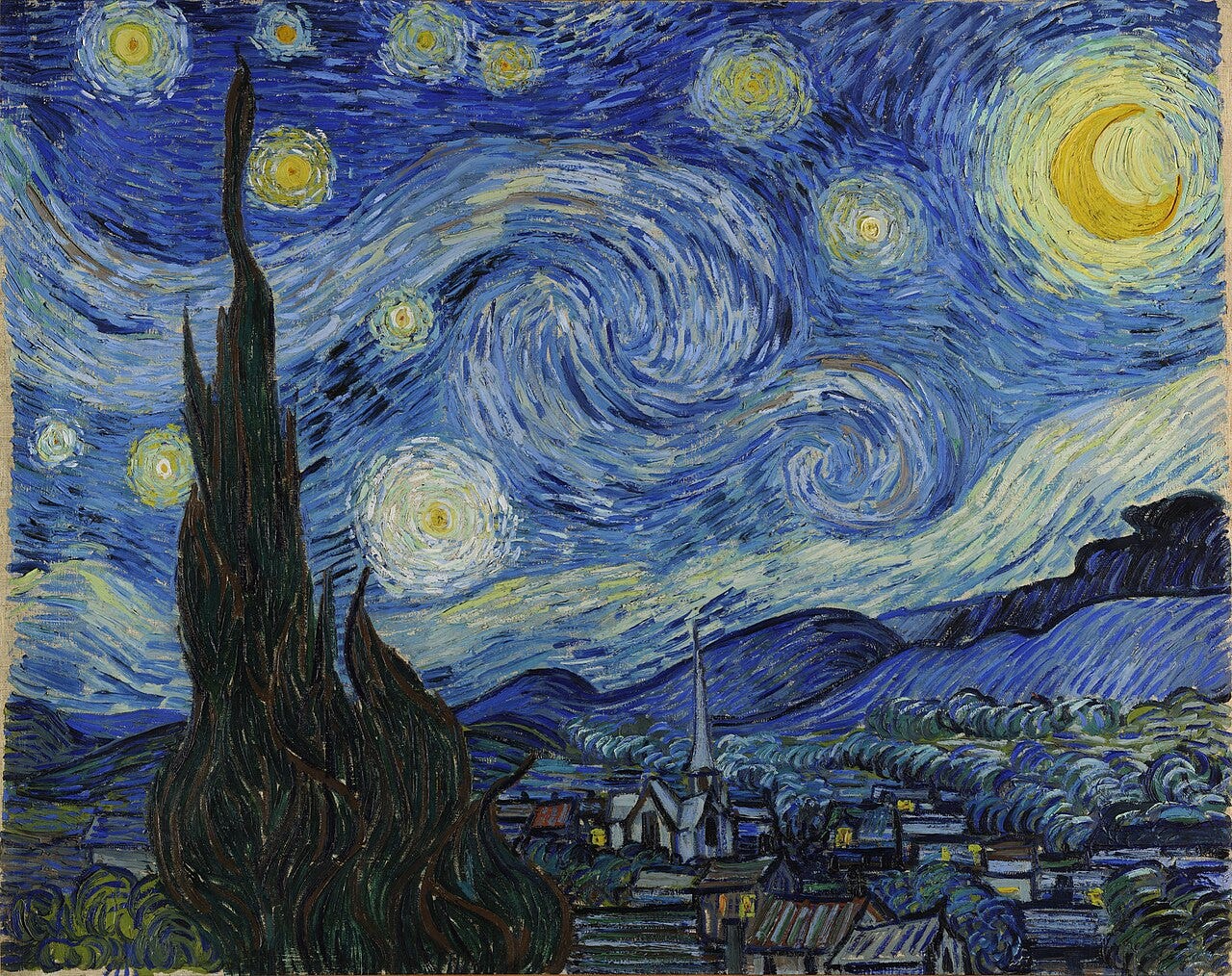
We are writers, so our medium is language3. Words4 are our pixels, the brushstrokes5 of our pointillism. Up close, the brushstrokes of an expressionist painting come into focus, beautiful and intentional, if a bit chaotic. Step back, and you lose track of the individual strokes, even as you gain the perspective to see something entirely different—an entire scene in three dimensions, foreground separated from background, the painted subject in all its glory.
The elements of visual art, from the granular to the gestalt, all emerge from and depend on the pixels. But all of them are essential to the identity of the piece in their own right, and their interplay is part of what constitutes the work’s richness.
We can zoom in and out of literary art as well. And we do, every time we talk about it, every time we make it. Except we don’t zoom through physical space. We zoom in and out of narrative space—the conceptual-emotional realm that linguistic meaning allows us to paint with. And there are already words for movement through non-physical spaces. To move further from the specific (to zoom out) is to generalize. To gain perspective from the individual words is to move “up” a level of abstraction.
While "high concept premise" is a high level of abstraction trait, "voice" is a very low level of abstraction trait, adhering in the paragraphs, phrases, individual word choice and punctuation of the text.
Traditional elements like plot, setting, and character range across the levels, depending on how granularly you'd like to engage with them in a given context.
E.g., you can summarize the entire plot in one paragraph, similar to what we've done above (high level), or give a detailed scene-by-scene breakdown of the story (low level).
Likewise, you can describe a character’s arc in a couple of sentences, in terms of what they’re like at the beginning, what they’re like at the end, and the key lessons they absorb along the way (high level). Or you can list the character’s actions and psychological states at each moment they appear in the story (low level).
Pacing is typically a lower-middle level phenomenon, a matter of how the story pulls you through its pages and chapters, the frequency of meaningful story beats and surprises.
As an intuitive litmus test, the higher up you go, the more tempted you will be to think in terms of “structural” features of a book (as opposed to, say, “stylistic” ones).
I hope it's already clear that "higher" does not mean "better." Nor does lower. All stories contain many levels of abstraction, all of the levels are real, and none are inherently more important than the others (I would argue). But having these levels in mind gives us some additional scaffolding for understanding and categorizing what each of us cares about in our stories.
3. Levels of abstraction and the frustrations of pitching
Levels of abstraction also explain part of why so many writers dread writing synopses and queries.
While writing this post, this note from Marble happened to come across my Substack feed. And I was like, I guess I have an answer:
If what's great about your book exists at a level of abstraction below what can be accessed within the word count available to you for pitching, then you're basically wasting your time.
In fact, when it comes to the kind of back cover copy we started this article with, many literary novels probably sound much worse than they actually are at that level of abstraction. This is a disservice to the story, which would probably be better served by a quote or excerpt, if the voice was the whole point all along.
Then there's writers like me, who love summarizing our stuff, almost to a fault, for the opposite reason. My muse prefers to assign me high concept stuff. Describing my novels in a few paragraphs is actually kind of a sweet spot. Just scroll through the descriptions of the pipeline novels on my home page.
This is a blessing and a curse. An inverse risk appears: high-level descriptions that are better than the book; readers who buy, intrigued by the premise, who are ultimately disappointed by the execution. As a reader/viewer, I feel this disappointment on the regular (it often inspires my best work!).
I go out of my way to avoid this by making the execution of each premise both thorough and surprising, teasing out third and fourth-order implications that even a relatively intelligent reader wouldn’t deduce—at least, not after reading the description and reflecting for half an hour. (In my experience, one reliable way to unlock the satisfying surprises is simply to be more rigorously thorough than anyone else has bothered to be).
The goal is for people to say things like:
“What I loved most about your story is how you had answers for everything. Every time I came up with a question about the side effects or physics or possibilities in this world, my questions were answered as the story developed. This felt extremely satisfying as a reader.”
Which is what my friend and Clarion West classmate Ana Hurtado said of The Oddest Thing About the Folks on Grove Point Road, my attempt to do something fresh in the time loop subgenre.
4. Abstraction as an Axis of Genre
"Genre" is a notoriously ambiguous term, in part because the one word is used to describe at least five distinct axes within the storytelling arts, and presumably more, from the age of the intended audience (middle-grade, YA, adult) to how sharply the setting’s “laws of physics” diverge from consensus reality (fantasy, sci-fi, realism) to the core emotional experience of the story (romance, horror, adventure), etc. Level of abstraction offers another, one that speaks to the literary/genre divide.
What many of us mean by "literary" is that the artistry at the lowest level is a big part of the draw. A good literary writer is also a strong prose stylist, a good literary novel is strong on a line level. This certainly isn’t the only thing we mean by “literary,” but it’s part of the grab-bag of implications. I've certainly used it this way. When asked to summarize my body of work for those in the publishing industry, I say I write "high concept literary speculative fiction."
This label has always been an attempt to indicate that I can do it all, across every level of abstraction from premise to voice. Even if every individual line isn't a banger, my work is chock full of bangers, and it's an important part of my writing identity that you might discover your favorite paragraph in any given work of mine you pick up.
And then there's poetry. I don't typically write poetry proper. But even so, my fellow novelists and I know what it's like to slow down and tune up the lyricism in key moments of a story, drawing the reader's attention via elevated voice, whenever a passage warrants a deeper attunement to the poetry in our prose. Poetry is hyper-focused on the lowest level by its nature.
5. Rounding Things Out: Not Just a Sci-fi Thing
You don't have to write sci-fi to write high concept. Some of my favorite works of contemporary lit fic include:
Room by Emma Donoghue - narrated by a five-year-old boy who has never left the room of his birth, where he is held hostage with his mother by their abductor, unaware that his life is abnormal
Nutshell by Ian McEwan - a woman plots to kill her husband with his brother... as overheard by the fetus eavesdropping from her womb6
The Lovely Bones by Alice Sebold - the aftermath of a teenage girl's murder is processed by the girl herself, as she observes the ripple effects through her family and community from beyond the veil
You’ll notice the high concept element for each of these novels has something to do with the POV/narrative device. This isn’t a coincidence. It comes from:
My personal taste, as a reader and writer drawn to playful or experimental points of view (fans will notice the resonance of all three titles with The Experiment Himself)
More to the point of our discussion, narrative device is inherently a high level of abstraction element of storytelling.
If you’ve restricted yourself to telling a (mostly) realistic story, and therefore can’t sprinkle mind-blowing sci-fi elements into your premise, one of the remaining ways to make your story high concept is to get funky with perspective—who’s telling the story, and how are they telling it?
6. Narrative Device: A Paradigmatic High-Level Element
The narrative device directly informs every single sentence in a novel. This is one way of understanding what it means for narrative device to exist at a high level of abstraction.
Even the fanciest narrative device can be fully encapsulated in a brief description; but that brief description constrains the possibilities at the word and line level, setting a boundary around what can and can’t be written into the narration.
Nutshell can’t include conversations that are beyond the expecting mother’s earshot, just as Room can’t include direct commentary on the “horror” of the situation that Jack takes for granted (though the reader can infer quite a bit, and this clash between reader perspective and narrative perspective is the primary delight of the reading experience). Only language in keeping with information the narrative POV would have access to—filtered through their understanding of that information, filtered through their communication style and their motivations for sharing said information—can appear in the book.
Narrative devices that aren’t reducible to a particular character or personality still work this way: a novel in the form of a standardized multiple choice exam “must” adhere to that format. This is the kind of positive constraint that channels, enables, and often supercharges creativity.
“Must” is in scare quotes. Obviously, authors can do whatever they want at the line level, breaking the apparent logic of their narrative device according to their intuition. The point is, this would indeed be breaking something. The point is, this would amount to changing the narrative device (or discovering something new about it). The point is, narrative device is a real feature of stories, every bit as real and identifiable as the actual words of the text, and there is a complex relationship between these levels of abstraction in which causation runs in both directions.
Because when an author does choose to obey the logic of a particular narrative device—one chosen ahead of time, or discovered during drafting—and has to exercise some additional conscious discipline over each sentence they write as a result, what they are doing is subordinating the lowest levels of abstraction to the higher one. The artist has determined (rightly or wrongly) that the load-bearing decision7 they’ve made at a high level of abstraction is worthy of protecting and honoring, potentially at the expense of more intuitive or organic line-level decisions and other darlings.
7. Kanakia vs. Sender: When different levels encode the same information
Two heavyweights of literary Substack, Naomi Kanakia and Courtney Sender, explicitly prioritize very different elements of fiction when evaluating stories. Courtney is focused on voice, while Naomi is somewhat suspicious of those who focus on voice, because it tends to be a distraction from what matters most, which is story.
In Courtney’s words, from her post On Lamination:
“Voice is one of those nebulous words that get tossed around a lot, but it is, to me, the single most important element of fiction.”
Courtney claims to know, from reading only the first paragraph of a given novel, whether or not she will enjoy the book as a whole.
By contrast, here’s Naomi, from her post Style and Story are the Same Thing:
“I personally am not one for gushing about sentences. My feeling is that you generally don't remember the sentences in a book—you remember the story. A novel is a vehicle for telling a story. The story is what's sticky and impactful. It's like with a building, you don't say, ‘This is such beautiful concrete!’ You say, ‘This building is so graceful and airy.’ And yet, in order to be well-made, a building also needs to be constructed from good materials.”
The fun thing is, Courtney and Naomi are friends. And somewhat hilariously, they tend to like the same books! According to Naomi, when Courtney recommends a novel (on the basis of the prose, of course) it invariably meets her approval. Yet they consistently talk about one and the same book in completely different ways!
“I'll say, ‘Wow, I love the decisions the author made in structuring this story.’ And she'll say, ‘Yes, yes, but what about those sentences!’”
I like to explain the apparent disagreement, and its synthesis, like this:
Courtney is primarily focused on voice, the lowest level of abstraction. But she judges voice in large part based on its congruence with higher levels of abstraction in the piece.
Courtney draws a distinction between “permeable” and “laminated” prose. Permeable prose allows you to “sink in,” organically and effortlessly inviting you further into the pages. Laminated prose is bad, it kicks you out, makes you “bounce off.” The most common way for prose to be laminated is to be purple. To draw attention to itself for its own sake. To be trying too hard, basically.
In Courtney’s words:
“False lyricism is my number-one problem with books I find laminated.”
“Laminated language is prose that is self-consciously trying to dazzle with its own brilliance.”
“Language that draws attention to itself or its poetry, but has nothing interesting or new to actually say when you go and give it your attention.”
If bad prose draws attention to itself for its own sake, for what sake should it draw attention? And what sorts of “interesting or new” things might it say?
Presumably, the prose should work in part for the sake of the higher levels of abstraction, the larger story-universe gradually emerging as the words build on each other. The paragraphs should operate as building blocks (to borrow from Naomi’s architectural metaphor) rather than isolated shiny objects.
A book of isolated shiny objects is perhaps best thought of as a poetry collection, whether or not the author intended it to be. And poetry collections are great! But if it’s not what the author intended, there’s a good chance it’s a bad poetry collection.
The word “permeable” was always a strong hint, or more than a hint. I like the image of prose as permeable membrane, which immediately raises the question: a membrane between what? On one side is surely the reader. And on the other, something beyond or behind the prose, distinct from the prose even if the prose is the only way to access it. These are the higher levels of abstraction, the meaning the prose collectively generates and refers to, the various elements of story from plot to character to theme and beyond.
Courtney also gives us a whole category of “interesting or new” things that good prose should say. They’re called “wisdom claims,” and she gives us an example from the opening line of Olga Tokarczuk’s novel Drive Your Plow Over the Bones of the Dead:
“I am already at an age and additionally in a state where I must always wash my feet thoroughly before bed, in the event of having to be removed by an ambulance in the Night.”
A wisdom claim is like a literary hot-take, an opinion (e.g., that one ought to have clean feet when picked up by an ambulance) just funky enough that it forces you to pause and consider, sensing a whole idiosyncratic worldview behind the claim. It serves to “establish the narrator’s particular voice and narrative authority.”
While we’re at it, I’ll show off the spiciest wisdom claim from my own recent work, a line from my shapeshifting narrator in the second chapter of Hello My Other, Hello My Self:
“This distinctly mammalian physiology, and the complex social and psychological dynamics that reliably emerge from it, feels like a torturous kinky game of pretend that my mother inducted me into before I knew enough to consent.”
Okay, so wisdom claims are an aspect of voice, and it’s possible to use them and judge them without reference to higher levels of abstraction. All in keeping with Courtney’s focus on voice above all, right?
BUT WAIT. In her post on The Atomic Material of Story (which is itself a more structurally focused, higher level of abstraction idea) she gives us another reason why opening wisdom claims are so useful for writers, couched in the language of story and structure rather than voice: she says, essentially, that a good wisdom claim sets up plot.
“How does this work? Essentially, a character’s understanding of the world sets a dare to the story. The story will challenge the character such that they have to adjust, deepen, reject, or otherwise test and likely change their initial understanding.”
This is a very high level way of justifying the voice!
In summary, Courtney is clearly attuned to all the levels of abstraction in the storytelling craft, and voice is her primary way in. Voice is the signal she’s trained to pick up, at an incredibly sensitive level, such that it tells her something about everything else. (To the point that the opening paragraph gives her a strong sense of the quality of the story to come, like an assay or biopsy of a… tumor… or something.)
Conversely, Naomi's insistence on structural soundness tends to filter out work by authors who don't have a strong enough sense of their story's higher levels of abstraction to ensure that the lowest level actually serves them, rather than moving at cross-purposes or being incidental to them.
Because of the harmony across levels of abstraction in any great piece of literature, the net effect of these two apparently opposite selection criteria is to pick out more or less the same subset of books8.
8. Closing With Some Elephants in the Room: Realism vs. Illusionism With Respect to Higher Levels
Well, what do you think?
I’ve introduced this concept, “levels of abstraction,” that isn’t part of how we standardly talk about literature, and claimed that we could, even should, talk about it in those terms. There will be additional justification for this in follow-up posts. But the core concepts are here. To my fellow writers, readers, literary critics, philosophers, nerds: how does it land?
I imagine some of you thinking everything I’ve said about levels of abstraction is kind of obvious or trivial. You feel like the post ultimately didn’t go anywhere, or teach you anything about writing. You’re wondering why we need this new, pseudo-technical-sounding, awkwardly academic way of framing the elements of story, when the familiar ways work just fine.
That’s good, I think. That means you’re with me. I think the idea of levels of abstraction maps really well to a lot of what we all already agree on and find intuitive, and the core purpose of this post was to lay out some of the evidence for that. So it should feel less like I’m saying something new, and more like I’m saying something old in a new-ish way. The reason this is valuable is because, frankly, the familiar ways of framing the elements of fiction DON’T work just fine. Not for thinking and talking in a sophisticated way about how AI fits into the picture.
I’ll be doing that a lot in this series: suggesting a new framing that offers more flexibility than the old framing, so we can extend the new framing to help us think about AI writing tools, capturing much-needed insight where the old framings failed us. Often I’ll do this simply by introducing an axis or spectrum where we’ve tended to think in terms of a binary or a handful of quantized classifications. Levels of abstraction is the first in our new arsenal of concepts. The obvious is our foundation for some wilder conclusions I’ll propose later, which I expect to feel counter-intuitive to many.
Others of you might just think I’m crazy.
There’s one specific way you might think I’m crazy that I’d like to get ahead of.
Maybe the visual art metaphor rubbed you the wrong way. You understood the analogy I was making, but it just didn’t seem to hold water for you. Language just seems too specific and idiosyncratic of a medium to map onto digital photography or painting like that. You’re not convinced there is anything like the “zoomed out expressionist painting” for literature to map.
Or maybe, every time I said things like “all of the levels are real” or “none of them are inherently more important” or “narrative device is a real feature of stories, every bit as real and identifiable as the actual words of the text” or “there is a complex relationship between these levels of abstraction in which causation runs in both directions”… something inside you objected.
Those with some philosophical training may have spotted it immediately, and had the language to articulate it. Those with a more purely literary background may have felt it intuitively, but not had the words for it. So I’d like to give you the words, because this is a conversation I’d like us all to be having out in the open, here in the genAI era.
It’s a question of metaphysics and ontology. It’s a question of philosophical realism with respect to the ideas behind the words we write. It’s a question of whether or not the levels of abstraction actually exist, and in what sense.
You can be a realist with respect to morality. You can believe there is an objective moral standard, independent of anyone’s feelings or opinions on the matter, given by the universe (or by God, as the case may be, though not necessarily by God; many atheists are moral realists). On such a view we can discover moral truths, and we can be mistaken about the moral facts (as when most of a nation is okay with chattel slavery or thinks exterminating the Jews will fulfill their duty to humanity).
Alternatively, you can be an anti-realist with respect to morality (sometimes called an “error theorist,” as in everyone who’s talking about morality like it’s a real thing is making a fundamental error). For example, morality might just be a conventional way of speaking about and expressing human preferences for how people should behave. There is both great diversity and some general convergence on these preferences, as one might expect from our shared evolutionary history, but there’s no further fact of the matter beyond the preferences.9
There’s an analogous realist/anti-realist spectrum in many areas of philosophy. Another perennial favorite, notoriously confusing, and newly relevant (again) in the age of AI, is consciousness. Is it just synonymous with the physical facts of the being experiencing it, “pain” a way of speaking about certain neuronal firing patterns (“eliminative materialism,” a hilariously sinister label for one anti-realist view of consciousness)? Or does it represent an entire non-physical layer of reality in its own right, giving rise to the “hard problem of consciousness,” which science will have to reckon with for the foreseeable future?
And in the philosophy of language (yes, a very real and vibrant sub-field) you can be a realist with respect to meaning.
As in, are the meanings of words and sentences distinct from the words and sentences themselves? Are meanings independent entities—floating out there somewhere in non-physical reality, regardless of whether any language can express them or any particular human thinks them—to which our words and sentences refer?
Put another way, do the sentences “Snow is white” and “La neige est blanche” mean the same thing? And if so, what is the nature of this third thing, the thing they both mean, which isn’t identical to either sentence (or any sentence), but which many sentences have a certain relation to?
And then of course, instead of just sentences, we can ask the same sort of questions about an entire story.
And when we do so, we’ll find ourselves asking whether plot is “real,” whether theme is “real,” whether levels of abstraction are “real”… or if all that’s really real are the words.
Anyway, we’ll do at least one full post in this series on “Philosophy of Language for Writers.” I’ve already stolen too much of my own thunder. For now, I just want to put a stake in the ground and say the following five things:
I’m a realist (in some form, to at least some extent) with respect to meaning.
Much of the standard way practicing writers talk about the craft presupposes realism with respect to meaning (including discussions at various levels of abstraction, though of course not in terms of “levels of abstraction”).
Whether one is a realist with respect to meaning creates a bias in how they will perceive the artistic validity of certain uses of AI in writing. (This holds true whether or not one is consciously aware of what “meaning realism” is, or of their own deepest intuitions in this area.)
Many common anti-AI writing takes are inconsistent with meaning realism. This may represent a contradiction in the beliefs of many writers, which if successfully pointed out to them, may trigger an uncomfortable but fruitful wrestling with their understanding of the artform.
It would be pretty cool if, going forward, the baseline self-awareness of philosophical positions regarding our medium goes way up in the literary world. I would love to see this moment in AI inspire the writing community to embrace and incorporate the insights of adjacent fields (linguistics, philosophy of language, others?) that have always been available to us but which we largely ignored. This could spark a renaissance in writing pedagogy, and give us all some new tools for our practice.
Let me know if you’re a realist or not in the comments, subscribe to make sure you catch the rest of the series, and if you want more of a glimpse into how these philosophical views imply certain stances toward AI, peep my discussion with Matt Cardin in the comments of his note. He is most definitely not a realist of meaning!
This is Hanya Yanagihara’s A Little Life, adapted from the Amazon description of the novel, with relatively little change beyond the removal of Jude’s name. My version is 59 words.
Ted Chiang’s novella, “The Story of Your Life” (basis of the film Arrival), collected in Stories of Your Life and Others. Since the novella isn’t published in isolation, I wrote this description myself, and did my very best to match the tone and level of generality of the Little Life description. 55 words.
The crazy thing is, I think this relatively obvious statement (that language is the medium of writers) is something we need to have a discussion about. And I think Levels of Abstraction are a good prerequisite for that discussion. I think it’s possible that many familiar writerly activities are best understood as occurring in a medium somewhat abstracted from the language—the medium of, say, “story” or “narrative,” which then happens to be instantiated in the medium of language.
This was a more theoretical line of thinking prior to the mass adoption of genAI chatbots, but now that it’s possible to disaggregate and delegate so much of what was always lumped together as “writing,” we may bump into the tangible reality that there are multiple interwoven mediums—even interwoven artforms—in the process of writing a novel. A human artist can now choose to participate in some of these, rather than all, and still get to the same end result. We then have a practical decision to make about whether “writing” refers to all or only some of those activities, and what to call the ones it doesn’t. Perhaps a “novelist” is not always a “writer.” We’ll follow this thread in a forthcoming Note in this series called “Knowing Your True Medium.”
We’re thinking in terms of English throughout this discussion. The lowest level is perhaps the phoneme/morpheme, whatever the smallest meaningful unit in the language is. We'll just call it the word for convenience, even though we could quibble about this. The lowest level is not the individual letter/character, I would think (otherwise an audiobook, in which there are no letters, would be an adaptation into a different medium, rather than one and the same work of art delivered in a different sensory modality, which is how we generally tend to treat them. Though there are many exceptions, and to the extent that the unique affordances of the auditory modality become significant, then we really are changing the work, edging into theater, radio play, or spoken word performance…) We'll talk more about this in "Knowing Your True Medium" as well.
I’m aware that I’m mixing two very different artforms in my visual art metaphor: digital art (pixels) and analog painting (brushstrokes). I don’t mean to conflate them. The reason I introduce both and toggle between them liberally is because I’m hyperaware of the unique limitations (and strengths) of each as metaphors for literature, and would like them to mitigate each other’s deficiencies.
For example, pixels don’t seem to carry enough personality or richness, within their regimented and perfectly specifiable RBG values, to map to the idiosyncrasy and etymological depth and messy connotative webs and wild variety of words. Brushstrokes, on the other hand, do a better job of capturing the humanity of word choice. However, brushstrokes are frustratingly difficult to quantify, to a greater extent than the individual characters, words, and other syntactical elements of text. Sometimes the individuality of words is a distraction from a point I can make most clearly with appeal to the nature of words as building blocks for something larger, and I might prefer the pixel metaphor in such cases.
Nutshell is also a Shakespeare retelling (it borrows the plot of Hamlet) which is another way of generating a high concept premise. Though it’s sort of cheating (in a good way) in the sense that it’s borrowing the cultural power built by all of the levels of abstraction in another work, and smashing them into the premise via the magical condensing power of the work’s title. Not incidentally, this is why comp titles (the “this meets that” formula for elevator pitching a work of fiction) are such a ubiquitous feature in the entertainment industries. It’s an incredibly efficient way to convey information about a story, including a shortcut to communicating features of the lower levels of abstraction, like voice, when you only have time/wordcount for a brief, high-level summary.
“Load-bearing decisions” will be a key concept in our new aesthetics of 21st-century creative writing. This is meant to pick out all of the creative decisions—conscious or unconscious—that are essential to a work of art; as differentiated from those decisions we might think of as trivial.
The need for such a concept comes from now-common debates over authorship credit in particular uses of AI. A human prompter says, “the ideas are mine, I wrote the prompt, therefore I’m rightfully credited as an/the author/contributor.” And an AI skeptic says, “No, you didn’t write the actual text of the finished piece, and contributed nothing of substance, so the AI is the author, if there is one at all.”
The truth is likely more nuanced and subjective than either of these takes suggest, and will vary case by case. Some of the decisions that can be entered into a prompt are more substantive than others. There are obviously trivial ones, like maybe length constraints (e.g., prompt: write me a story between 750 and 1000 words) and more meaningful ones (e.g., prompt: I’d like to set this story in 12th century India because of the thematic resonance of that era with our premise. Please help me begin to bring the setting to life with some descriptive passages based on the attached three articles we uncovered during research, and make heavy use of color words…).
A load-bearing decision is a know-it-when-you-see-it thing. Between the obviously trivial and the clearly substantive, there will be plenty of room for reasonable disagreement in the gray area (one of the guiding principles for this series is “Commitment to Pluralism”). All of us can begin to shape our personal sense of what counts as a load-bearing decision and what does not, and it will be nice to have a shorthand phrase for this, and a label for what we’re disagreeing about. I’m sure I will write more on this.
In fact, Naomi says as much, just not in our parlance of levels of abstraction:
“And with sentences and story, well...they're the same thing, no? The story is constructed using sentences. Each of those sentences has some purpose within the whole. Beauty consists of fulfilling that purpose. If the whole is good, then the sentences must be good too. And, more importantly, the sentences take their shape from their purpose. The choice of what information belongs in the story—this is a choice that's determined by the nature of the story. And yes, the author's work here is usually done unconsciously or by instinct, but that doesn’t mean there isn’t some unspoken connection between the part and the whole—it just means that even the author usually isn’t able to consciously explicate that connection.”
Bolded emphasis mine. There's a lesson there that I want to keep in mind throughout the series: It is possible, as an author, to not consciously know how your own fiction works. In fact, it's inevitable to some extent. You can create great work with fairly high conscious ignorance, if your unconscious intuition covers what you don't know explicitly.
One thing it can mean to improve your craft is to make explicit more and more of what was unconscious, articulating it to yourself so that you can apply it to your work more intentionally and consistently.
Another way to improve is to simply learn through trial and error how to better activate your intuition for the results you want. (For example, here Courtney defends the value of staying immersed daily in your work-in-progress so that the unconscious is more likely to hand you solutions to the problems in your novel.)
I think we all know this. But I think we’ve missed some of its implications when it comes to AI writing. I’ll explore them in a forthcoming post on “The Phenomenology of Mystery vs. the Necessity of Mystery.”
I realize I played fast and loose with the concepts here, that I conflated metaethics with normative ethics, that it’s possible to be an expressivist and still be a realist, blah blah blah. The point wasn’t a perfect taxonomy of views in academic moral philosophy. Just to create enough of a sketch of the landscape for a convenient analogy with theories of meaning that a layperson can understand without thinking too hard. Don’t come at me about consciousness either.
Your footer #7 teaser around attributing authorship reminded me of the recent Mel Robbins “Let Them” scandal - not the most important part, where she blatantly stole the whole premise - but the part of that story where she ended up adding her daughter to the cover as a co-author only because of social pressure. It illustrates exactly what you’re pointing to, and folks are much less conflicted assigning collaborator status to another human than to AI. What you’re fleshing out here is the language that’s missing around our assumptions and gut feelings, and could make more tangible what we’re really talking about. Good start to the topic.
Fantastic piece! This “levels of abstraction” idea is a really thoughtful and helpful way to think about why a piece is working, from the high-concept to the language-level. You’re right that a really generic-sounding plot can be an incredibly un-generic work if it’s firing away on that “low level of abstraction” voice.
And of course, thanks for summarizing my and Naomi’s approaches so well…and for harmonizing them, too. I think you’re right to ask, of my laminated examples, what then should voice be in service of? And to find the answer at that higher level of abstraction.
I’ll be following this series. Great way of thinking about stories.